

A month ago I was lying on a couch in a silk robe telling my friends I was failing in life.
Both of them burst out laughing and told me to shut up.
And they were right.
Because look at the scene: four months in Asia, back in Berlin, one friend literally weeding my garden for me, and there I am in a silk robe announcing failure with full dramatic energy. (Sometimes you need two people to laugh you back into perspective.)
Here's what was actually happening. I was in the messy middle. Between two conference talks that terrified me, a business growing faster than my nervous system could keep up with, and the specific kind of exhaustion that comes from trying to be everywhere at once.
So let me tell you about those two talks. The honest version.
re:publica: Train Your Attention Like a Muscle in the AI Internet.
I had never spoken at a conference before in my life.
I prepared most of it from an Ayurvedic cleanse retreat in Sri Lanka, procrastinating with podcasts, beach walks, and AI, like a completely normal person. I figured I would never feel ready. So I just showed up.
Before Freelance Unlocked, there was re:publica in May.
Title: Train Your Attention Like a Muscle in the AI Internet. Re:publica is one of the biggest digital and media conferences in Berlin. And the talk wasn't about my business or my silk robe. It was about something I've been thinking about for over a year: what AI is actually doing to the way we think.
Here's the number that started everything: 47 seconds.
That's how long the average person stays focused on a digital task before switching to something else. Twenty years ago the same number was two and a half minutes. In one generation, our attention span got five times shorter. Five times.
I love AI. I really do. AI is my therapist, my coach, my CEO strategist, and if I let it, my opinion-maker. That last one is the problem.
What's happening slowly, while we're not paying attention, is this: we are outsourcing our reasoning. Not typing. Not grammar. Reasoning. The thing that makes you you. The thing democracy runs on.
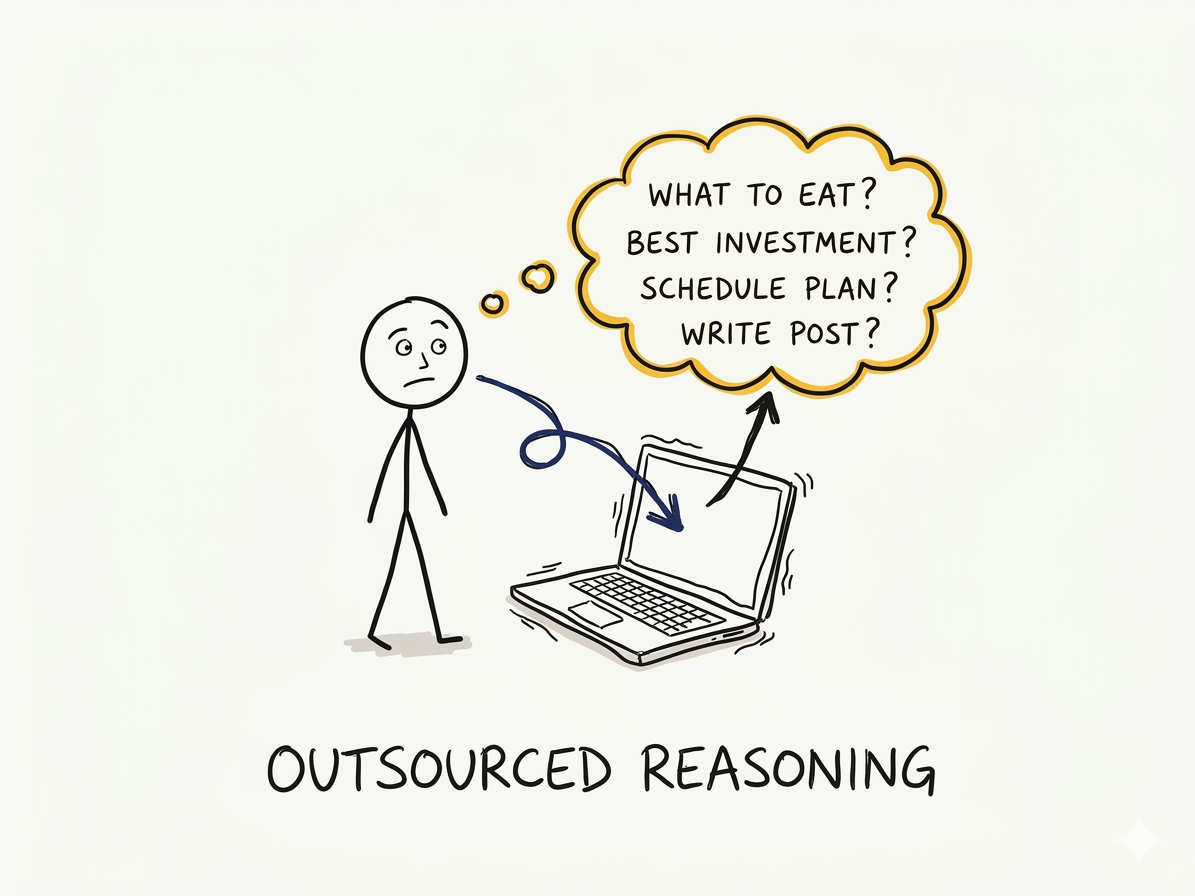
MIT ran a study with 54 students writing essays, some with ChatGPT, some with Google, some with just their brains. One minute after finishing, one question: can you quote a single sentence from what you just wrote? The no-tools group: 11% couldn't. The ChatGPT group: 83%.
They named it cognitive debt.
I stood on that stage and said something that felt risky: protecting your attention is a political act. The public sphere needs people who can hold a thought for longer than a scroll. A nervous system that's being mined twelve hours a day can react. It cannot actually think.
I gave the room seven protocols. Not one tip. A whole protocol. (I am not sending anyone home with a single breath exercise and calling it a day.)
The one slide that got photographed more than any other was a Blaise Pascal quote. 1654.
"All of humanity's problems stem from man's inability to sit quietly in a room alone."
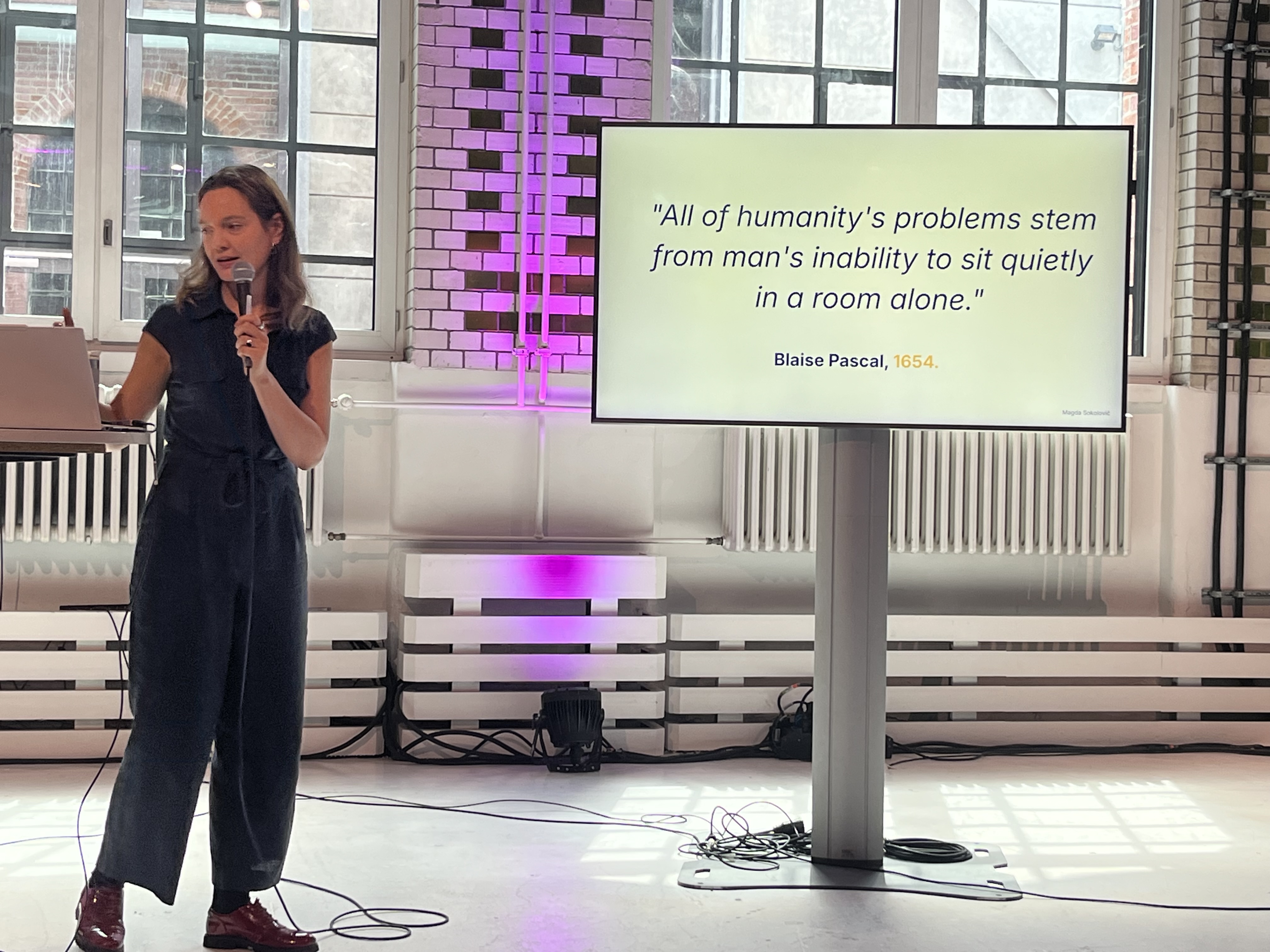
He didn't have an iPhone. He didn't have TikTok. He didn't have Claude. And he was already sounding the alarm.
Freelance Unlocked: My second conference talk
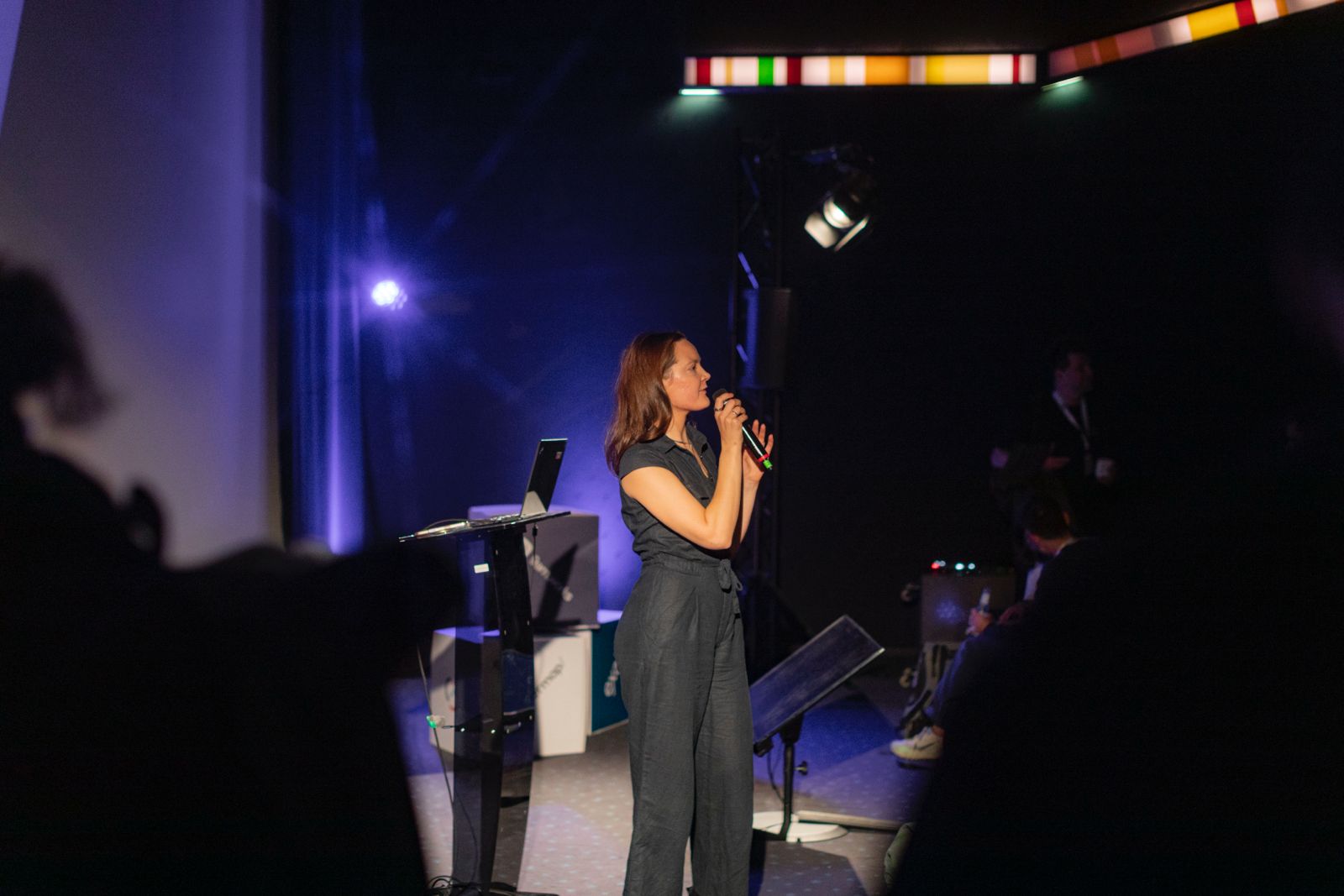
June 12th. Berlin. Freelance Unlocked 2026.
Title: Building a Business That Supports Your Life, Not the Other Way Around.
.jpg)
The talk was about Identity-Lifestyle Fit. I borrowed the term from Dan Koe and gave him full credit. The idea is simple: when what you build doesn't match how you actually want to live, you end up in a quiet little war with your own life. You hit goals and feel nothing. You build habits and drop them. You achieve the thing and immediately start worrying about the next one.
I talked about the two versions of me. Performed Magda: founder, speaker, AI workshop creator, slow-traveling Asia. And Real Magda: terrified of DMs, hates follow-ups, said yes to a draining client the previous week because she had bills to pay, and wears the same outfit five days in a row because decision fatigue is very real.
The audience laughed at the silk robe moment. Then I asked them to close their eyes and picture their ideal day. Not the LinkedIn version. The real one. Embarrassingly specific.
That was the climax. Not a framework. Not a system. Just: what does your actual life look like when the business is serving you instead of eating you?
I got a QR scan rate I didn't expect. Two warm AI workshop enquiries landed the same week. And a feedback form full of people who recognized themselves in the story.
I figured I would never feel ready. So I just showed up. That's the whole trick.
What both talks had in common
I didn't plan this when I wrote them.
But looking back: both talks were about the same thing. Attention.
Not productivity. Not hustle. Attention. The thing you give to your work, to your clients, to your business, to your own life.
At Freelance Unlocked, the question was: where is your attention going? Is it going toward the business you're building, or toward the business that's eating you?
At re:publica, the question was: where is your attention going? Is it yours, or is it being colonized by algorithms, AI-generated content, and infinite scrolling that costs nothing to produce and costs everything to consume?
Same question. Different room.
Here's the thing: the work I do for clients, Webflow websites that convert, SEO that actually gets found, AI tools that work while you're at the beach, all of it is attention infrastructure. It exists so the right person finds you without you having to be everywhere at once. So your website does the attention-work instead of burning through yours.
Speaking on stages about this has made me better at the work. Because I had to get very clear about what I actually believe.
What comes next
More of it, for sure.
Plus corporate workshop enquiries that came directly from the re:publica talk, which I did not see coming at all.
If you're an event organizer who wants someone who talks about AI, attention, and the very human problem of building something that doesn't eat your life, let's have a call
And if you're a female founder who recognized herself in the silk robe story: the Website Clarity Scanner is free, takes 90 seconds, and it's the fastest way to find out whether your website is doing the attention-work it should be doing for you.
Because the goal is always the same.
Your website works. So you can stop thinking about it.